Atanasovsko Lake
Best time: March-May and August-October for migration; summer for salt bathing
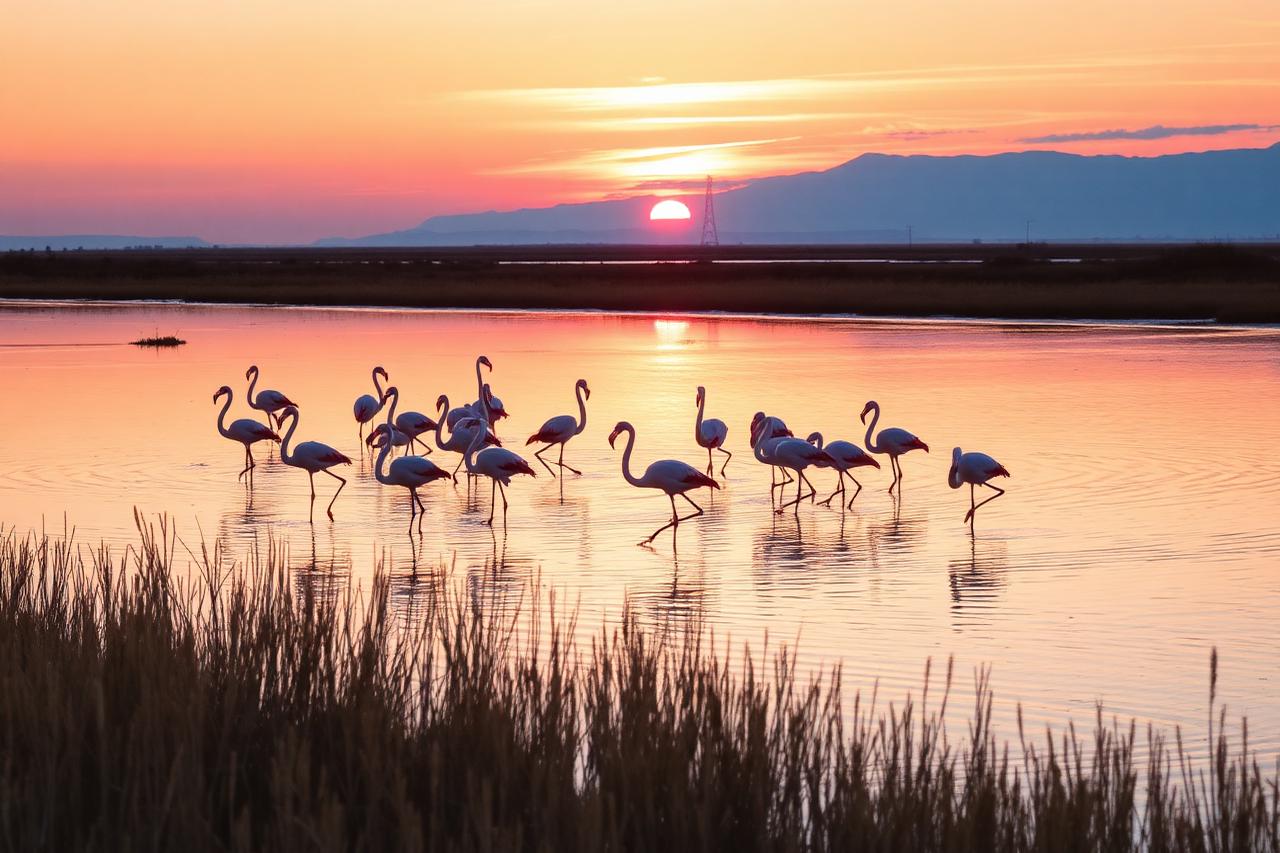
A working salt pan on the northern edge of the city, split by the main coastal road. Flamingos, pelicans, avocets and black-winged stilts are common. There is a visitor area with salt-and-mud bathing in summer and a boardwalk over the pans.
Poda Protected Site
Best time: Year-round, best early morning
A small reserve south of the city run as a nature conservation centre, with hides, telescopes and a roof terrace. The easiest place to see herons, cormorants, spoonbills and nesting colonies up close.
Lake Vaya (Burgas Lake)
Best time: November-February for wintering flocks
The largest natural lake in Bulgaria, on the western side of town. An important wintering ground for ducks, geese, pelicans and, in cold spells, rarities pushed south from the Danube.
Mandra Lake
Best time: Spring and autumn
A reservoir further south with open water and reedbeds, good for raptors, grebes and pelicans. It sits next to the Poda area, so the two combine easily in one morning.